


Try this experiment right now: Think about some of the happiest moments in your life, and then close your eyes and perform your favorite meditation.
When you are deeply relaxed and grounded ask your “intuition” to give you a new definition of happiness.
You’ll be surprised by what you hear. Why? Because you were using a different circuit in your brain!
1. The first network is often referred to as your “motivation network” that is largely controlled by the nucleus accumbens which releases the neurochemical dopamine into many areas of the brain.
It’s in the deepest and most ancient part of your brain and it emotionally guides you toward survival needs and pleasurable pursuits.
We recognize this form of happiness as immediate gratification – brief, temporary, and potentially addictive.
2. The dopamine released by the motivation network wakes up your conscious ability to map out a plan to achieve your desired goal
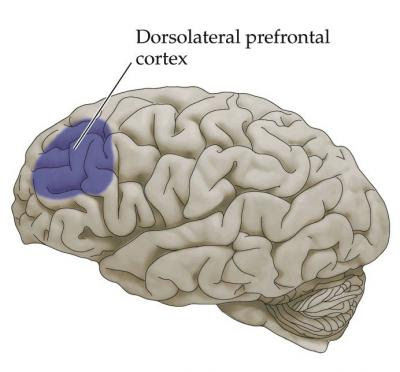
This is where you anticipate a potential reward and worry about ways you might fail, and this frontal-parietal interaction is now referred to as your “executive control network,” governed mostly by your dorsolateral prefrontal cortex, a small area just above and behind your eyes.
It pulls up memories from the past and seeks out the easiest ways to overcome obstacles that stand in the way of your goal and anticipated reward.
This form of happiness is mental: a word-based concept anchored in your habituated beliefs.
In other words, most people feel happy or unhappy because they “think” they are. It’s a very superficial level of happiness, but it’s the place where we consciously spend most of our time.
3. Another part of your brain generates a wide range of fantasies and creative forms of imagination.
It turns on the moment your conscious mind gets tired – every few minutes, in fact, although we're rarely aware of it.
This is your “default mode network” and it involves many areas of your brain. This where you are unconsciously solving problems, but again, we're rarely aware of this process unless we engage in a deep contemplative self-reflective activity like mindfulness.
If you spend too much time wandering around in this state, you won’t be able to accomplish goals that would lead to long-term satisfaction, a state that psychologists find is deeper level of happiness.
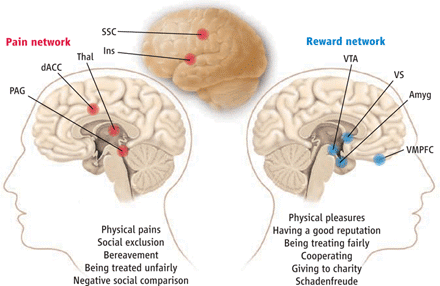
4. The fourth neural system that is essential for happiness is called the “salience network” containing the insula and anterior cingulate, key structures that help integrate perceptions, emotions, and interpersonal experiences.
These areas place a positive or negative “value” on any experience you have in the present moment.
For example, when you savor a glass a wine or a hug from someone you love, you are using the salience network in your brain. Interestingly, this network is also stimulated by mindfulness practices and contemplative meditation.
But you must go beyond the mental chatter of your executive control network, and the playful daydreaming states of your default mode network, if you truly want grasp the experience of intuitive happiness and the kind of subtle joy that gives life meaning and purpose.
These four areas – your instinctual drive to seek happiness and pleasure, conscious mind that helps you to strategize your goals, your daydreaming imagination that finds creative solutions to obstacles in your way, and your ability to be intuitively attuned to your innermost feelings and values - will control how much “happiness” or “unhappiness” you’ll experience.
The more you use the practice of mindfulness to become aware of these unique neural processes, the more you can manipulate your brain AND the environment to reach greater levels of pleasure, happiness, satisfaction, and well-being.
(Source: Brain networks of happiness: dynamic functional connectivity among the default, cognitive and salience networks relates to subjective well-being.)
What level of happiness are you functioning on, GAbriel? Need some tips on how to level up?
Here are some small ways you can increase your happiness factor:

For decades we’ve known that babies won’t thrive without physical holding and affection.
There is little that will comfort or reassure small children as well as a hug from a loved one.
Yet, it is not uncommon for parents to stop hugging their kids as they reach puberty.
For many adults, the amount of physical nurturing they receive declines as they age, even as medical studies confirm that the health benefits of physical touch extend throughout our lives.
A heart to heart hug can have significant benefits on our health and happiness in the following ways:
A heart warming hug increases the feeling of safety, security, trust and belonging. These are the foundations of all healthy relationships. Research has shown that relationships in which hugging and touching are present tend to be stronger and longer lasting.
Gulledge et. al. in Psychology Today say, “Touch is crucial in creating and strengthening romantic relationships. Tactile physical affection is highly correlated with overall relationship and partner satisfaction. Moreover, conflict resolution is easier with more physical affection—conflicts are resolved more easily with increased amounts of hugging, cuddling/holding, and kissing on the lips.”
When we hug or kiss a loved one, our oxytocin levels rev up. This powerful hormone has the ability to alleviate social anxiety and produce feelings of trust. It also has the peripheral ability to reduce stress.
Oxytocin has been observed to reduce cortisol in the body and lower blood pressure. Gallace and Spence, state that women who report having received more hugs from their partners in the past have been shown to have significantly lower blood pressure levels than those women who do not have much history of being hugged by their partners. Accordingly, affectionate physical behavior can lower reactions to stressful life events.
Serotonin is often called the ‘Happiness hormone’.
Physical touch can increase serotonin levels. Serotonin helps regulate dopamine. Dopamine can lead to aggressive and sometimes violent behavior. Whereas, elevated serotonin levels create periods of happiness.
Health Keepers Magazine states that everyone needs hugs and touching to maintain serotonin levels, so hug friends, loved ones and even your pet, often.
When you are in a deep heart to heart hug with someone you love, it is very difficult not to relax. When you relax, you lessen the tension in your body.
Hsin-Yung Chen et al. have found that deep touch pressure (DTP), which is often provided by holding, stroking, hugging, swaddling, and squeezing, can calm people who are anxious and thereby improve their coping behavior.
From the instant of our birth tactile sensations are imbedded in our nervous system. Then during our childhood the loving hugs and cuddles that we receive develop into our sense of self-worth which we carry into adulthood at a cellular level. That is why when we are feeling down, unsure of ourself or confused a hug can often transform those feelings back to one of self-worth and a positive attitude.
Loretta Graziano Breuning, Ph.D. reports, “more touch, more oxytocin, more trust.”
Hugging provides manual stimulation of the parasympathetic system.
A hug can restore the balance in our nervous system.
Many people live in a constant state of high alert and high anxiety which puts the sympathetic nervous system on alert. When this happens the parasympathetic nervous system, which produces a calm and relaxed state is under active.
By stimulating the parasympathetic nervous system in a hug, we can restore balance. With the balance restored, we naturally slow down our pace of life and feel calmer.
In a recent article published in Psychology Today titled “The Power of Touch,” DePauw University psychologist Matthew Hertenstein demonstrated that we have an innate ability to decode emotions via touch alone.
Scientists used to believe touching was simply a means of enhancing messages signalled through speech or body language, “but,” Hertenstein says, “it seems instead that touch is a much more nuanced, sophisticated, and precise way to communicate emotion.”
We need 8 hugs a day for maintenance. We need 12 hugs a day for growth.”
Have you had your quota of hugs today?
